Saturday, October 26, 2013

It's Time To Look Out For Icing....

                                                    The weather has turned cold, it was 29 degrees this morning in Charlotte. That means it is time to consider the effects of icing on your airplane. The main considerations I will get into involve how ice accumulations on the airfoils affect flight. I just reviewed an excellent article published by AOPA*. Well worth reading, as I only touch on many things discussed therein.

I would like to reference three articles I have written on the subject of icing:
                Ice Beware It’s  Everywhere-2/1/09
                Ice Will Get You Unless You Do It Right-2/15/09
                You May Not Be Able To Prevent Significant Icing From Forming On Your Plane

Quick review. So you arrive at the airport and find that there is just a little fuzz type of ice on the wings, no thicker than a piece of “coarse sandpaper”*. No problem, right? Wrong according to most authors, who claim that even this thin accumulation of ice may decrease lift and increase drag. The referenced article offers this: frost and thin ice accumulations may decrease lift by as much as 30% and increase drag by 40%. So pay attention to your planes lifting surfaces.

Now if you arrive at the field and your plane has a thick crust of ice and or snow all over, you better go for a cup of coffee and prepare yourself for a tough job ahead. You have to get the white stuff off!  Why can’t you just scrape a bit off and fly away. Because, basically the presence of the snow, ice and whatever, has changed the shape of the airfoils of the `wings and stabilizer. This decreases the lifting ability of the flight surfaces to provide lift. Importantly the stall speed increases as does the drag. So pay attention to your planes lifting surfaces.

I am not going into what flight conditions pose the most problems for icing. Check the listed reference for a good discussion of those factors. They also discuss carburetor and induction inlet icing.

I will relate one of my experiences with arriving at the airport ready for a quick departure, only to find my Cessna 340 covered with a layer of clear ice. My wife was with me, and we had to spend almost an hour whacking and banging on the ice. After I decided that enough was gone from the main lifting surfaces, I decided to give it a try. The plane was lightly loaded, the air temp about 34 degrees. The plan: keep the plane on the runway longer than usual, thereby taking off with some excess airspeed. If the plane responded normally, continue the take-off, if not chop the throttles and land. All was ok, the take-off felt normal with good control responses, so off I went.   

In flight icing in my experience, never caused me any real problems. I always was alert for a decrease in airspeed due to drag, or an apparent mushiness of the controls. The biggest fear was to get into a stall due to the negative effects of the ice on airspeed and lift. Make sure that the stall warn deice was on and carb heat on when flying that type of engine in icing conditions.

So study up on the negative effects of icing and plan ahead. The big trick is to AVOID getting  into ice and always leave yourself an out.

*Aircraft Icing-Weather Advisor AOPA  SA11-11/02
NTSB Safety Alert- Aircraft Ground Icing 


Tuesday, September 24, 2013

Common Yet Unexplained Accidents


Terrafugia TransitionTerrafugia TransitionSometimes it’s hard to figure out what to write about. This is one of those times. However, there has been something nagging at the back of my head for some time. How come I read about so many seemingly trivial accidents/mishaps on takeoff and landing on the FAA accident site?* For example: landed and went into the trees, on landing flipped over, on taxi struck a parked vehicle or airplane, on take-off from a private field crashed into a shed etc. I counted twenty-one of these events in just two days plus a weekend. Yeah, I know weekend warriors etc. For example on 9/21/13 two events were listed one after the other. Both struck a pole while taxiing. Just one day prior again two listed one after the other: aircraft left the side of the runway and the other aircraft left the side of the runway into a ditch. How does one manage to do all this?

In my 40 plus years of flying I once dinged the wing tip of another plane while taxiing and cracked the lens of a wing tip light of another high wing Cessna. Cheap to repair and not really a big thing, although at the time I was horrified on seeing what I had done.

So I have to wonder whether pilots are really paying attention to what they are doing. Could they be looking at something non-essential such as a hand held device? Or maybe texting a friend that they are running behind and not to worry if they are a bit late.

Another thing I puzzle over is why I keep reading about nose wheels failing on landing. The only reason I can come up with is that maybe pilots aren’t flaring sufficiently to hold off the plane and land on the mains. In other words, landing too hot and literally forcing the plane on the ground when there is still some flying speed left. Ok, maybe there is an occasional bearing failure or some other mechanical problem causing a failure, but I believe that to be rather rare.

If you find that you are having some of the problems I have described above maybe you should try flying the”Terrafugia**, A Transition Roadable Aircraft”. Good luck in staying safe and on the tarmac.


Sunday, September 1, 2013

After Reading That There Have Been 96 Accidents In Various Models Of The Rockwell Commander 690....


After reading * that there have been 96 accidents  in various models of the Rockwell Commander 690 since May 1969, I have gained a new respect for the level of piloting skill that is required to fly one. I spent time reviewing some articles concerned with the piloting of twin turboprops and turboprops in general.  I now appreciate that they are really considerably more complex than their smaller conventionally powered cousins e.g. the Beech Barons, Cessna 300 and 400 series etc.

All one has to do is to look at the pictures of the cockpits, with special attention to the engine and prop controls, as well as to the engine instrument gauges to gain a new perspective. The fixed shaft Garrett engines that power the 690 have four engine gauges per engine. While the Pratt & Whitney PT-6 which powers the King Air has six gauges per engine. That’s a lot to pay attention to. The main time the pilot must watch these gauges is at start-up so as not to exceed a critical engine temperature. Failure to do this might result in a Hot Start, with resultant engine damage if the engine is not immediately shut down. Anyway, this is just to make us aware that the turboprop engine requires more out of the pilot as compared to the conventional piston powered type engine.

The planes themselves are heavier than their piston counterparts such as the C-310, Pa-31 or B-58 by several thousand pounds. Critical stall speeds are higher. For example the stall speed with full flaps and gear (dirty) is 75 kn, while in a Pa-31 Navajo, a plane I used to fly (and love), stall speed dirty is 65 Kn. Big difference, especially for the non-professional. OK, now maybe you see where I am heading with this. In order to feel competent when flying any of the planes I used fly, whether Pa-31 or a Bonanza, I needed to fly a lot, frequently as often as once a week or more. To think that I could comfortably handle the complexities of a twin turboprop, as a non-professional on a casual basis is just out of the question.

So, in my opinion, the pilots of the recently crashed Aero Commanders  had a lot to contend with.    Maybe when everything is just fine, both engines purring along, weather not too bad, field in sight and cleared to land, all is OK. But as in New Haven, things can get a bit dicey, quickly. Weather getting bad, a sudden runway change and too much to deal with in a demanding plane can be overwhelming. The other crash occurred during recurrent training at 12 to 15 thousand feet. It isn’t that hard to enter a single engine stall when the nose of a heavy plane is pulled up a bit too far with one engine idled. But it is almost impossible to escape a flat spin when one is accidentally entered. These usually end with a fatal crash. That is one scenario I suspect happened as discussed in my article of July 5, 2013 in Operationsafeflight.blogspot.com.  

In summary. The twin turboprop is considerably more difficult to fly than the smaller conventionally powered twins. That means piloting a turboprop requires considerably more skill and training than some may believe. The statistics are a bit scary as are the recent number of crashes.  Future turbo pilots beware and prepare.


*http://aviation-safety.net/wikibase/dblist.php?AcType=AC90

Thursday, July 25, 2013

The Recent Crash Of A Boeing 777.....

 Disclaimer:  The following is a presentation of a recent crash and discussion based on published information. Analysis of this information is that of the author of this report.

The recent crash of a Boeing 777 at SFO was very disturbing when one had the chance to analyze the data presented. Mainly, it seemed that no one was minding the shop. The defense of the flight crew that hinges on the autothrottle is almost ludicrous. I compare it to the driver who is caught speeding along at 75 telling the trooper that “I had the speed control set at 60”. It hinges on responsibility. Whether driving a car or more critically, flying a commercial airliner. The pilot in charge or the driver behind the wheel must be accountable for the actions of their vehicles, whether a plane or a car.

In doing some research on the internet, I was fortunate to come upon a detailed analysis* of a 2008 Boeing 777 crash that occurred at Heathrow airport in Great Britain. Due to the exemplary (and what one should expect) actions of the flight crew, a serious disaster was averted.

Let me present some facts about the Boeing 777 before proceeding further about specific actions. It entered the flight line in 1994. There have been only two or three hull type accidents since inception, the one above included. The recent crash is of particular interest as there was no apparent mechanical problem noted. The only area in question, according to the three pilots, referred to the function of the autothrottle, an automated throttle control linked to the autopilot etc.

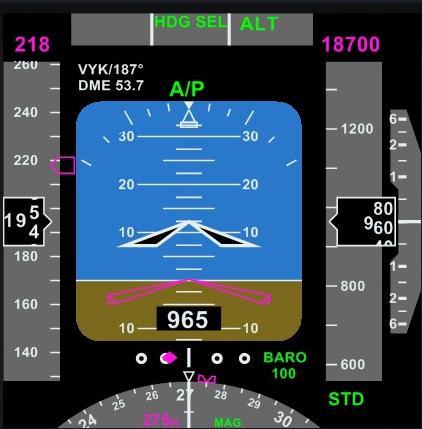
Now let me get into some of the features of the B777. I just finished reading that it was designed using the fly by wire (fbw) concept. This protects the airplane from control inputs that might cause structural damage or exceed safe flight conditions e.g. a stall. On the pilots instrument panel as part of the primary display, specific warnings are shown when the plane is flying below the minimum maneuver air speed. The crashed plane at SFO was flying dangerously below safe airspeeds. Therefore I must assume that ample warnings were available. What was done by those pilots? Good question, it doesn’t seem like enough.

By comparison, the flight crew of the* B777 landing at Heathrow in 2008 did everything right. They followed established procedures, learned and practiced over their entire careers. When on final approach into Heathrow, there was a sudden decrease in thrust in both engines occurring almost simultaneously, due to an undetectable ice accumulation in the fuel system. The autothrottle was engaged at the time. The co-pilot, flying at the time advanced the throttles to try to increase engine thrust. However there was no response from the idling engines. The plane started slowing to below minimum safe speeds and the plane started to sink towards the airport outer boundary. The auto-pilot tried to pitch the nose up, but as this would further decay the airspeed, it had to be disconnected by the copilot. While the co-pilot was lowering the nose of the plane to prevent a stall, the captain was wisely reducing the flap setting to 25 degrees to decrease drag. But, alas it was too late to stop the inevitable, and the plane sank further until striking the ground just short of the runway. There was only one passenger injury, no deaths. The plane was a total wreck.

That the flight crew performed admirably is an understatement. When one compares what apparently the flight crew of the Asiana plane did, or rather didn’t do it is appalling. In reading further about the 777, it is stressed that there are all kinds of low speed warnings, prior to “stick shaker”. According to the flight report, there was a “master caution aural warning, indicative of “”airspeed low””.  What more was needed to alert the crew of three including a high time instructor? The accompanying picture above, taken from the cited article is an example of a typical (quite visible) airspeed to the left of the main screen.

Well now I hope you have a good idea of what can be done in a time of crisis with an airliner at near stall speeds only a few hundred feet above the ground. But more importantly I want to discuss responsibility in the cockpit. The pilot in charge (PIC) must know what is happening at all times. That means monitoring lots of data such as airspeed and attitude perhaps the most basic. When the plane is flown with the autopilot engaged, one could easily assume that all is well and become complacent. The same thing with the autothrottle that commonly is linked to the autopilot. These automated systems however are not absolutely infallible and must be monitored. If they do indeed fail or inadvertently disconnect, the pilot must be ready to immediately take over. If not a duplication of what happened on final to SFO could happen again i.e. passively sit by as the airspeed and altitude bleed away as the plane crashes to the ground.

Remember that the pilot in charge is responsible for the safety of his/her crew and passengers. Complacency just won’t cut it. You may get away with it for a while, but eventually some form of  disaster awaits.

*Aircraft Accident Report 1/2010, Report on the accident to Boeing 777-236ER, G-YMMM at London Heathrow Airport on 17 January 2008

Friday, July 5, 2013

Thoughts On A Recent Accident

 
Recently it was reported that a South Carolina businessman on a recertification flight in a Rockwell Turbo Commander 690B crashed over McClellanville, SC. Two people were killed, the 44 y.o. pilot and the 69 y.o. instructor. They had taken off from John’s island airport and were to operate between 13000 and 15000 feet as cleared by ATC. Supposedly the pilot-owner had been flying this plane for three years. Credentials of the instructor are unknown.

The purpose of the flight as stated above, was to recertify the pilot, presumably for insurance reasons. To comply, generally a set of flight skills are examined. These would typically include: take-off and landings, air work such as steep turns, slow flight etc. and of course instrument flight under simulated low visibility conditions. The other important area of consideration is putting the pilot through simulated engine out procedures. This normally is done by retarding power to flight idle on one engine, usually the so called critical engine (usually the left hand engine on most twins). Finally, the approach to a stall with one engine idled is tested, likely also with the pilot under simulated IFR conditions (pilot hooded). This latter flight test just may be the cause of the recent crash.

Now it has been a few years since I went through a similar procedure. It was when I flew part-time charters for a fixed base operator (FBO) in Burlington, VT. Every six months it was necessary to obtain a check ride with a certified instructor in order for me to legally fly charters. These charter flights included both passengers and/or freight.

Typically the check rides consisted of a variety of maneuvers including slow flight and this key: slow flight approach to a stall with one engine “out”. With an “out” engine being simulated by retarding the throttle of one of the engines, usually the “critical” one (see above). Before entering into this exercise, the correct procedure for carrying it out was clearly discussed with the instructor. The hazard to this maneuver was this*: if while slowing the plane by bringing its nose up, the plane was allowed to stall, a violent falling off towards the “dead” engine most likely would occur. This almost certainly would progress into a flat spin with possible aircraft inversion. If that were to happen, it most likely would be unrecoverable. The goal of the exercise was early recognition of an impending stall. Once the warning of a stall is received as for example by noting some slight vibration in the control yoke, a prompt push of the control yoke is done to start the plane down immediately. Some of the more sophisticated aircraft have various indicators of stall, including: lights, buzzers and other type annunciators. The reason for all of this is that a stall in a complex plane like the above twin has a reasonable likelihood of being a fatal event. (See NTSB report referenced below)

When I was practicing this on my check ride in a B-58 Baron, all went well. I brought the nose of the airplane up until the first indication of an imminent stall, and then quickly shoved the nose down, allowing the plane to regain a safe flying speed. The next week however, another pilot was undergoing the same series of maneuvers, including the approach to stall with one engine ”out”. This time however, the pilot waited too long to push the nose down and the plane entered the stall with the awful result discussed above. The plane, the same one I had flown, entered a flat spin and descended rapidly towards the waiting rough terrain. Fortunately the instructor pilot was a National Guard F-16 instructor pilot and was able to stop the spin just before the plane struck the ground. There were serious injuries, a destroyed aircraft but no deaths.
This scenario is what I think may have occurred over McClellanville.

*NTSB Aircraft Accident Report, North American Rockwell Turbo Commander 690, Wellsburg, West Virginia, 8/14/72 NTSB-AAR73-5, A-73-8 thru 10

Thursday, June 20, 2013

Gear Down And Locked ?

Gear down and locked? I certainly hope so. If not you are headed for an LGRA (landing gear related accident). According to the FAA, they occur about six to seven times per week. These accidents almost all are done by general aviation pilots.  Interestingly according to the same author *, high timers rather than neophytes outnumber the perpetrators. Before I go into the ramifications of landing gear-up, I must point out that the majority are caused by pilot error and not mechanical failure.
Perhaps the worst thing about forgetting to put the gear down is damage that occurs to the plane and the high cost to repair it. Some examples of cost are as follows*:
                                 What insurer pays                                  Pilot owner pays
              Single engine 1990 -$40,000-65,000                     $16,000 -25,000
               Multi-engine   1990 -$80,000-145,000                 $26,000-44,000
Pretty expensive isn't it?

Of course, in addition to a bruised ego and a drained bank account, there is the loss of being able to fly your plane and the potential large increase in insurance premiums, if at all still available. Finally, the plane loses market value as it was damaged.

So how can one avoid the costly mistake of a LGRA? There really are two cases. The first is under VFR (visual flight rules) or good weather, with the pilot arriving at an airport and making a landing without the need of electronic guidance, e.g. landing at the local small airport. Usually a pilot would enter a standard traffic pattern consisting of a downwind leg, then on to a base leg and then turn onto final and land. At each of the above segments, in addition to other pre-landing checks such as proper fuel tank etc., say to yourself gear down as you manually move the gear lever to the gear lowering position. Verify that the green gear down light or lights have lit. On the base and final legs also verbally acknowledge that the gear are down and locked. I used to say “three in the green”, meaning that all three wheels were down and locked. Again on final, check three in the green and even just before touchdown once more.

The second case, as mentioned above is when making an instrument approach in bad weather. It is really almost easier to NOT forget the gear lowering procedure here. As part of an instrument landing there is always a final fix which indicates the point one has to start the descent to the runway. At this point normally the gear are lowered to facilitate descent. Again as in VFR, acknowledge that the gear are down and locked (three in the green). Do this again before touchdown.

Sounds easy doesn’t it? Well during my 40 plus years of flying I never crunched down on the fuselage, but did come close just once. I was taking a recurrent check ride in a twin. We were finishing up a simulated engine out landing about to touch down when the instructor yelled into his intercom “aren’t you going to put the gear down?”. I gulped and started to reach for the gear lever but was stopped by the instructor and told to “go around”, a safer procedure in that circumstance. After that I went back to saying “three in the green” and verifying that in fact the gear were down.

There are other errors a pilot can make. For example after landing and in a hurry to raise the flaps, one might accidentally move the gear lever into the up position rather than the flap lever**. Nothing would happen if the “squat switch” is functioning. But if it is not the gear will retract and your plane is on its belly.

Well you get the idea. An ounce of prevention, in this case four magic words, will help keep one from a belly landing. Just say it: Gear Down And Locked or Three In The Green.
Happy and Safe Landings.

*What a Gear-Up Costs –by John Doolittle, owner of Sutton James Insurance in Hartford,Conn.

**The gear lever is shaped as a wheel and the flap lever wedge shaped resembling its name. This of course is to help the pilot differentiate the two without looking.


Sunday, May 26, 2013

Did I Use Up My Nine Lives?


Did I use up my nine lives? My wife thinks so, and I guess I do too. After I relate some of my adventures and misadventures, see what you think. Please note that several of these accounts have been previously reported.

The first of many really started way before I ever sat in a plane either as pilot or passenger. As a kid I used to ride my bike to nearby LaGuardia airport to “watch” the planes land and take-off.  I would stand as near the threshold  of runway 4 as I could, letting the planes, DC-4,6 and 3 types as well as Connies get as close to me as possible. That is until a policeman came up to me one day, and pointed to the large ruts in the bushes at the threshold area that marked where the landing planes had left their marks. They were made by the landing gear, and if I had been standing there. Ouch! After that I stood way off to the side. An early lesson l learned.

It was quite a few years later that I ended up doing the flying. When still a young inexperienced pilot flying out of Tew-Mac field north of Boston, I was supposed to be headed towards the Cape area in a Cessna 172 with several of my friends. All was well until I started seeing the mountains of New Hampshire instead of the flatter terrain south of Boston. Something wasn’t right. As I was only on a VFR flight I really hadn’t set up my navigation instruments, or really paid attention to other some things important either.This older plane, not unlike many small planes, did not have a slaved DG (directional gyro). This is the instrument that gives the pilot the magnetic heading the plane is on. As part of my pre-take-off check I had not taken the time to set the runway heading into the DG, and as a result it had been almost exactly 180 degrees off. So instead of flying south, I was heading north.  Therein was the explanation for seeing mountains instead of the ocean. Luckily I wasn’t in heavy IFR (bad weather)!

The next event, occurred years later also over northern Massachusetts, but somewhat to the west. I was flying my B-55 Baron( a light twin engine plane) from Great Barrington (GBR) to Burlington, VT (BTV). Flying VFR(visual flight rules), I was cruising at 8500 feet, without being in contact with any particular ATC facility. All of a sudden my windshield was filled with the image of a single engine plane that shot by me from my 5 o’clock position towards 10 o’clock. No time to react. The other plane, a Bonanza type had missed colliding with my plane by very little. Nothing to do but suppress a scream and wonder whether the other pilot had been asleep or reading a book while on autopilot. This was before TCAS and other anti-collision systems were available to help prevent near misses.

Finally I will relate another episode that could easily have ended with serious consequences. While a second year med student, I was able to continue to do some flying, working on achieving my instrument and commercial pilot licenses. One day some of my friends and I decided to that it would be great to visit Boston. I arranged to rent a Piper Cherokee (140 or 180). The four of us set off. Weather was VFR back in Syracuse but a bit iffy in the Boston area. Nevertheless, we departed. Great tailwind, so pilot beware. It didn’t take too long to reach the Massachusetts border, and all was well. A routine check of the weather in Boston revealed only some clouds but it was still VFR. However as we approached the Worcester area, the weather was deteriorating  rapidly enough so that I would have to make an instrument approach in Boston. Wow, how did that happen? Things can happen fast in the aviation world. As a VFR pilot I wasn’t prepared to land in bad weather. So, as Boston was I had no option but to turn around and try to land somewhere to refuel. Remember the great tailwind? Now it became a whopping headwind, knocking our groundspeed to probably about 80 to 90 knots. To add to the concern also was that now the airports such as Albany and even Utica had bad weather, only Syracuse was open to VFR traffic. Ouch! I leaned the engine as much as possible to stretch our diminishing fuel supply and crossed my fingers and maybe even prayed a bit. ATC(air traffic control) gave me advice and weather upgrades, but weren't able to advise me that the weather was legal to land for us until Syracuse. At any rate, we made it back, but just barely. When we pulled up to the pumps there couldn’t have been more than 20 minutes of flying time left. That was scary and a lesson learned for the rest of my flying career. Plan ahead for all contingencies.

Well there it is: my reflection on some events that could have had severe if not fatal outcomes. Yes, I do believe Lady Luck may have played a part here. What do you think?