 Preparing for writing the next blog is an interesting
task (most of the time). Lately I have been made aware of so many accidents
related either to the take-off or landing phases of flight, that I started to
read about the landing and take-off processes.* This a wonderfully written
article, with many superb illustrations, both diagrammatic and photographic. Not
only are details of the various types of gear given, but also the problems
related to the take-off and landing processes and their relationship to the
landing gear.
Preparing for writing the next blog is an interesting
task (most of the time). Lately I have been made aware of so many accidents
related either to the take-off or landing phases of flight, that I started to
read about the landing and take-off processes.* This a wonderfully written
article, with many superb illustrations, both diagrammatic and photographic. Not
only are details of the various types of gear given, but also the problems
related to the take-off and landing processes and their relationship to the
landing gear.
The illustrations are just fabulous. Details of the
simplest brake systems, with just one disc rotor to multiple disc systems used
on large aircraft. Discussions include complicated things as anti-skid systems
for airliners, not something a small plane pilot need worry about. But what is
valuable is the discussion of the
testing of brakes and brake systems for small and large planes. This
includes checking brake fluid and the subsequent addition of
fluid if more is needed. The replacement of brake linings is covered, as well
as brake adjustment.
Finally, tires are fully discussed. This includes the
various types, as well as inflation procedures and pressures. Complete
assessment of aircraft tires is covered as well as “how to do it”. This
includes tire inflation, tread inspections and repairs if needed. The article
ends with how to protect your airplanes tires during taxiing, take-off and
landing.
In summary: This
article is excellent reading for any pilot, but especially for those doing some
of their own maintenance
This all brings to mind an incident from years ago when I
was happily and nonchalantly flying around the Boston area in an old J-3 Cub.
The weather was warm and the side window flaps were up, offering the best
visibility of everything out there and wonderful “air conditioning”. As I had
been flying for about an hour, and the fuel dip stick was getting low, I
decided to head back to Tew- Mac field, North of Boston. (This airfield has
since been closed.) As I was looking down
at something of interest on the ground, three hundred feet below, I happened to
see something funny on the top of the right tire. There seemed to be a cut in
the tire, which looked like a small flap of rubber. Oh-oh I said to myself and decided that the
landing had better be gentle. A blow out would not be fun, and would probably
lead to an unplanned 360 degree turn and possible roll over. I decided to land
as gently as possible on the right main and hope for the best. Well, happily it
turned out fine. The tire didn’t go flat and was replaced.
So, pay attention to your landing gear and all associated
systems. Do this both in pre-flight and
post-flight. If you can do so while in flight, so much the better. Have fun up
there, but do look around.
*www.faa.gov/regulations_policies/handbooks_manuals/aircraft/amt_airframe_handbook/media/ama_Ch13.pdf

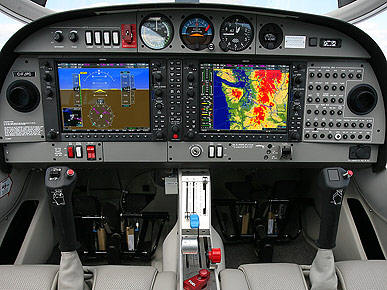 As it is approaching Christmas, I am going to offer a
present early, an abbreviated blog. Do I hear you cheering out there? Well,
here goes. This is aimed at you digital types, with all glass cockpits. In case
you missed it, all glass. Do you have any back-up analog instruments?
No. Well here is why you need them if you do any IFR flying in real weather conditions.
Let us suppose that you are on an ILS instrument approach with a visibility of ½ mile
and a ceiling of 200 to 300 feet. I’ve been there many times and it not only requires
precision, but an alternative option. The option to quit the approach if it is
not working out, for whatever reason.
What if at the last few feet of your descent, the digital (glass) system
fails? Yes, just goes blank. If you have your analog gauges insight and working,
you should be able to institute a missed approach.
As it is approaching Christmas, I am going to offer a
present early, an abbreviated blog. Do I hear you cheering out there? Well,
here goes. This is aimed at you digital types, with all glass cockpits. In case
you missed it, all glass. Do you have any back-up analog instruments?
No. Well here is why you need them if you do any IFR flying in real weather conditions.
Let us suppose that you are on an ILS instrument approach with a visibility of ½ mile
and a ceiling of 200 to 300 feet. I’ve been there many times and it not only requires
precision, but an alternative option. The option to quit the approach if it is
not working out, for whatever reason.
What if at the last few feet of your descent, the digital (glass) system
fails? Yes, just goes blank. If you have your analog gauges insight and working,
you should be able to institute a missed approach. In chatting with my son the other day, on his return from
another across the globe business trip, he related the following. As his huge
four engine Airbus A340 was somewhere in the pre-landing phase the left
outboard engine was struck by a bolt of lightning. It was accompanied by a loud
bang and lots of smoke. The plane shook and shuddered but otherwise seemed ok.
The passengers weren’t however, mostly scared out of their wits. After hearing
about this, I decided to do some reading on the subject and write about it
here. Fortunately my son’s plane landed safely with no obvious damage.
In chatting with my son the other day, on his return from
another across the globe business trip, he related the following. As his huge
four engine Airbus A340 was somewhere in the pre-landing phase the left
outboard engine was struck by a bolt of lightning. It was accompanied by a loud
bang and lots of smoke. The plane shook and shuddered but otherwise seemed ok.
The passengers weren’t however, mostly scared out of their wits. After hearing
about this, I decided to do some reading on the subject and write about it
here. Fortunately my son’s plane landed safely with no obvious damage.


